
Minazuki
1901-03
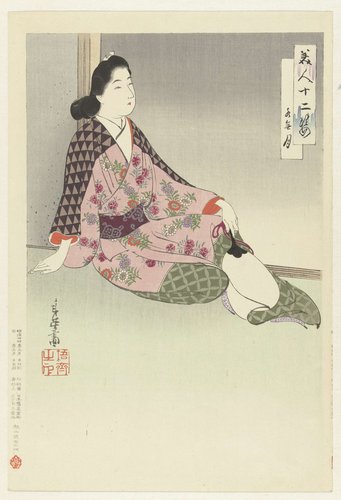
Medium
nishiki-e
Dimensions
353; 240
Rights
Public Domain
About this artwork
collector's mark: Lugt 2228
Art Historical Context
**Minazuki** byita Toshihide (8–1925) is a striking example of *nishiki-e*, the Japanese term for richly colored woodblock prints resembling brocade fabrics. Created between 1901 and 1903 during Japan's Meiji era—a time of rapid modernization and cultural transition—this vertical print measures 353 × 240 mm, a size for ukiyo-e works that allowed for intimate display in homes. Toshihide, a master of the late ukiyo-e tradition, was renowned for his vibrant depictions of actors, beauties, and daily life, blending classical techniques with emerging influences from Western art. The title *Minazuki* refers to the sixth month of the traditional Japanese lunar calendar, evoking summer's arrival with themes of purification rituals, such as the symbolic chinowa-kuguri—passing through wreaths of grass for spiritual cleansing. Toshihide's *nishiki-e* technique shines here, employing intricate woodblocks inked with up to 20 colors to achieve luminous depth and texture, a pinnacle of Edo-period innovation that democratized art for the masses. This medium's cultural importance lies in its role as a snapshot of fleeting beauty (*mono no aware*), capturing seasonal ephemera amid Japan's shift toward modernity. Bearing the collector's mark Lugt 2228, this print connects to esteemed European collections, underscoring its global appeal. Visitors will appreciate how Toshihide's work bridges Japan's artistic heritage with the dawn of the 20th century, inviting reflection on time's gentle passage.