
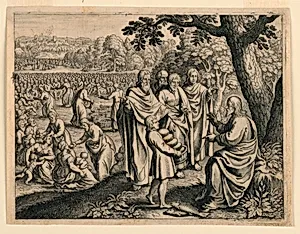
Miracle of Loaves and Fishes
Classification
Department
Smithsonian Collection
Museum
Smithsonian American Art Museum
Credit
Smithsonian American Art Museum
Accession Number
1896-31-18
Rights
Public Domain
About this artwork
Research in Progress
Art Historical Context
### Miracle of Loaves and Fishes Step into the dramatic world of 17th-century French religious art with Michel Lasne's *Miracle of Loaves and Fishes*, created around 1650. This print depicts the biblical miracle from the New Testament, where Jesus multiplies five loaves and two fishes to feed thousands, symbolizing divine abundance and compassion. Lasne (ca. 1590–1667), a skilled engraver from France, captured this timeless story during the Baroque era, a period when art served as a powerful tool for spiritual inspiration amid the Counter-Reformation's fervor. As a print, the work highlights the era's innovative reproductive techniques, allowing intricate details—flowing robes, expressive faces, and bustling crowds—to be widely disseminated at a time when original paintings were rare treasures for the elite. Lasne's mastery of line and shading brought depth and emotion to the scene, making sacred narratives accessible to everyday devotees through affordable engravings. Housed in the Smithsonian American Art Museum's collection, it reflects the enduring appeal of religious iconography in European printmaking. Though research continues, this piece invites us to ponder faith's miraculous power, bridging 17th-century devotion with modern reflection. (198 words)