
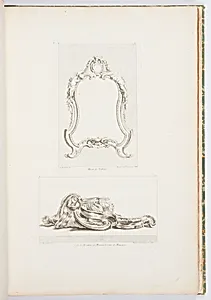
Miroir de Toillette., Mirior de toilette, 5th Plate
Medium
metalwork
Classification
metalwork
Department
Smithsonian Collection
Museum
Smithsonian American Art Museum
Credit
Purchased for the Museum by the Advisory Council
Accession Number
1921-6-212-30-a
Rights
Public Domain
About this artwork
Research in Progress
Art Historical Context
Juste-Aurèle Meissonnier, a Franco-Italian artist born in Turin in 1695 and active in Paris until his death 1750, crafted this exquisite *Miroir de To* (Toilette Mirror), 5th Plate, around 1740. Renowned as a pioneering rococo designer, goldsmith, and architect, Meissonnier blended Italian exuberance with French elegance, creating ornate metalwork that epitomized the lavish tastes of Louis XV's court. This piece, likely a silver or gilt-bronze dressing mirror frame, reflects his mastery in producing functional yet fantastical objects for the elite. In the rococo era, metalwork like this mirror served as both practical vanity item and status symbol, adorning boudoirs with intricate scrolling motifs, asymmetrical flourishes, and nature-inspired curves—hallmarks of the style's playful departure from rigid baroque symmetry. Meissonnier's designs, often disseminated as engraved plates, influenced generations of European craftsmen, bridging sculpture and decorative arts. Acquired by the Smithsonian American Art Museum through its Advisory Council, this rare survival highlights the transatlantic appeal of 18th-century French luxury. Though ongoing research reveals more details, the mirror invites us to imagine powdered nobles gazing into its reflective surface amid Versailles' opulence, a shimmering testament to rococo's whimsical grandeur.