
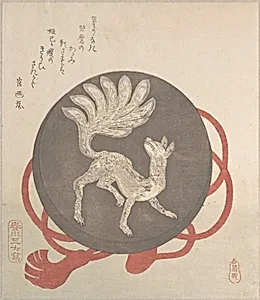
Mirror With the Design of a Nine-Tailed Fox
Medium
Woodblock print (surimono); ink and color on paper
Dimensions
8 9/16 x 7 7/16 in. (21.7 x 18.9 cm)
Classification
Prints
Culture & Period
Japan · Edo period (1615–1868)
Department
Asian Art
Museum
Metropolitan Museum of Art, New York, NY
Credit
H. O. Havemeyer Collection, Bequest of Mrs. H. O. Havemeyer, 1929
Accession Number
JP2161
Rights
Public Domain
Tags
Art Historical Context
In the enchanting world of Edo-period Japan (1615–1868), Harukawa Goshichi crafted *Mirror With the Design of a Nine-Tailed Fox*, a delicate woodblock print known as *surimono*. These intimate, privately commissioned prints were luxurious alternatives to mass-produced ukiyo-e, often featuring embossing, mica, and vibrant colors on paper to celebrate New Year's greetings, poetry gatherings, or personal milestones. Measuring just 8 9/16 x 7 7/16 inches, this gem from the Metropolitan Museum of Art's H. O. Havemeyer Collection captures the refined artistry of the time. At its heart is a hand mirror adorned with a majestic nine-tailed fox, or *kyūbi no kitsune*, a mythical creature from Japanese folklore. Revered as messengers of Inari, the Shinto deity of rice and prosperity, these foxes symbolize cunning, wisdom, and supernatural power—the more tails, the greater the age and abilities. Mirrors themselves held spiritual significance, used in purification rituals and as portals to the divine, making this design a potent blend of beauty and mysticism. Goshichi's masterful use of ink and color brings the fox's flowing tails and reflective surface to life, showcasing the precision of woodblock techniques like *karazuri* (embossed patterns). This print invites visitors to ponder the interplay of everyday objects and otherworldly lore, a hallmark of Edo Japan's vibrant cultural imagination.
About the Artist
Harukawa Goshichi · 1776–1831
Japanese, 1776–1831