
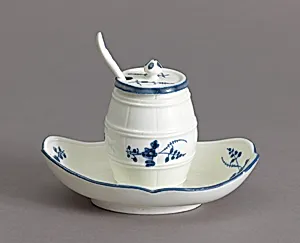
Mustard Pot with Attached Stand and Spoon (Moutardier à Plateau; Cuillère à Moutarde)
early 18th–mid- 18th century
Classification
ceramics
Department
Smithsonian Collection
Museum
Smithsonian American Art Museum
Credit
The John Jay Ide Collection
Accession Number
1977-52-17-a/c
Rights
Public Domain
About this artwork
Research in Progress
Art Historical Context
This elegant mustard pot, complete with its attached stand and, hails from the Chantilly Porcelain Manuf, one of France's pioneering porcelain workshops active from around 1725 to 1789. Produced in the early to mid-18th century—peak years of the Rococo style—this piece exemplifies the luxury tableware favored by the French aristocracy. Chantilly's soft-paste, a delicate European innovation blending clay, glass frit, and white clay, allowed for intricate molding and glazing that rivaled imported Chinese wares. As a functional yet opulent condiment server, the moutardier à plateau reflects the era's obsession with refined dining rituals, where even mustard warranted its own specialized vessel. The manufactory's signature "hunting flask" mark (often in underglaze blue) underscores its authenticity, marking Chantilly as a key player in France's porcelain race against Meissen and later Sèvres. Part of the Smithsonian American Art Museum's John Jay Ide Collection, this ceramic treasure highlights transatlantic tastes, bridging European craftsmanship with American collecting passions. Though research continues, its survival speaks to the enduring allure of 18th-century porcelain—fragile artistry born of royal patronage and technical ingenuity.