
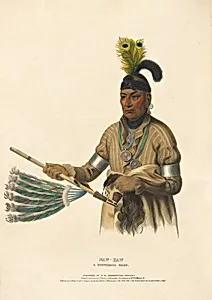
Naw-kaw
Medium
Classification
Department
Smithsonian Collection
Museum
Smithsonian American Art Museum
Credit
National Portrait Gallery, Smithsonian Institution; gift of Betty A. and Lloyd G. Schermer
Accession Number
NPG.99.167.14
Rights
Public Domain
Tags
Art Historical Context
**Naw-kaw (1838)** This striking print portrait captures Naw-kaw, a prominent-Chunk (Winneb) chief, rendered by an unidentified artist during a pivotal era of American expansion. Produced in 1838 amid the forced relocations of Native American tribes under U.S. policies like the Indian Removal Act, the preserves Naw-kaw's dignified presence, showcasing his role as a leader navigating tense diplomatic relations with the federal government. Adorned in traditional regalia—feathers, jewelry, a pelt draped over his shoulders, and a ceremonial pipe—Naw-kaw prominently displays a peace medal, a silver diplomatic gift from U.S. presidents to allied chiefs. These medals symbolized treaties and alliances, blending Native symbolism with American iconography, such as presidential profiles. As a print, the work allowed wide dissemination of such portraits, bridging cultural worlds through accessible reproduction techniques like engraving. Housed in the Smithsonian American Art Museum, this piece from the National Portrait Gallery's collection highlights the artistic documentation of Indigenous leaders. It invites reflection on resilience, identity, and the complex history of U.S.-Native interactions, offering visitors a window into 19th-century portraiture's power to humanize historical figures.