
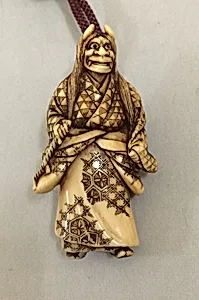
Netsuke of an Actor
Unknown Artist
19th century
Medium
Ivory
Dimensions
H. 2 in. (5.1 cm); W. 1 in. (2.5 cm); D. 3/4 in. (1.9 cm)
Classification
Netsuke
Culture & Period
Japan · Edo (1615–1868) or Meiji period (1868–1912)
Department
Asian Art
Museum
Metropolitan Museum of Art, New York, NY
Credit
Gift of Mrs. Russell Sage, 1910
Accession Number
10.211.469
Rights
Public Domain
Tags
Art Historical Context
This delicate ivory netsuke, carved in Japan during the 19th century, represents the refined tradition of miniature sculpture that flourished in the late Edo and early Meiji periods. Netsuke served a practical purpose as toggles, securing small medicine cases or purses to a man’s sash, yet they also became highly collectible works of art. Their tiny scale—here just two inches tall—demanded extraordinary skill, allowing artisans to capture expressive details in a form that could fit in the palm of the hand. Depicting a theatrical actor, the piece reflects the vibrant world of kabuki, a popular form of entertainment that captivated audiences across social classes. Human figures like this one were favorite subjects, celebrating the dramatic poses, costumes, and personalities of stage stars. The unknown carver’s attention to gesture and expression brings the figure to life, turning a functional object into a miniature portrait of cultural life. Ivory’s smooth texture and fine grain made it ideal for such intricate work, preserving crisp lines even after generations of handling. Today, this netsuke offers visitors a glimpse into Japan’s rich theatrical heritage and the everyday artistry that once adorned personal dress.