
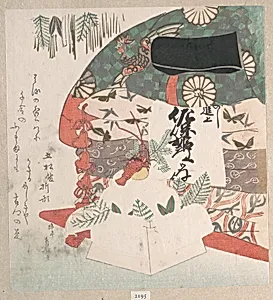
New Year Decoration and a Set of Bed-Clothing
18th–19th century
Medium
Woodblock print (surimono); ink and color on paper
Dimensions
7 3/4 x 7 1/8 in. (19.7 x 18.1 cm)
Classification
Prints
Culture
Japan
Department
Asian Art
Museum
Metropolitan Museum of Art, New York, NY
Credit
H. O. Havemeyer Collection, Bequest of Mrs. H. O. Havemeyer, 1929
Accession Number
JP2195
Rights
Public Domain
Art Historical Context
Behold this delightful *surimono* wood print, *New Year Decoration and a of Bed-Clothing*, by the Japanese artist Hachifusaūri in the 18th–19th century Surimono, meaning "printed things," were luxurious, privately commissioned prints often produced for special occasions like the New Year. Unlike mass-produced ukiyo-e, they featured exquisite techniques such as vibrant inks, subtle colors, and sometimes embossing or mica for a tactile, shimmering effect. At just 7 3/4 x 7 1/8 inches, this intimate format was perfect for personal exchange as greetings or gifts. The artwork captures the essence of Japanese New Year's traditions (Oshōgatsu), showcasing symbolic decorations—likely pine boughs or bamboo—and a finely crafted bedding set, evoking wishes for prosperity, warmth, and familial harmony in the coming year. Produced during Japan's Edo period, when woodblock printing flourished, it reflects the era's refined aesthetic and cultural emphasis on seasonal rituals. Part of the esteemed H. O. Havemeyer Collection at The Metropolitan Museum of Art, this piece highlights the artistry of everyday celebration in historic Japan. Lean in to admire the delicate layering of colors and precise lines, a testament to the woodblock process where carvers and printers collaborated meticulously. A window into festive Edo life!