
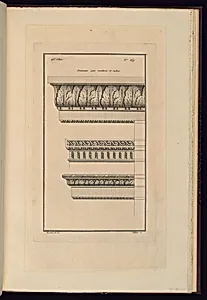
Ornements pour moulures et cadres
Classification
Department
Smithsonian Collection
Museum
Smithsonian American Art Museum
Credit
Purchased for the Museum by the Advisory Council
Accession Number
1921-6-254-73
Rights
Public Domain
About this artwork
Research in Progress
Art Historical Context
Juste-François Boucher (6–1782), son of the renowned Rococo master François Boucher, created *Ornements pour moulures cadres* around 1775. This elegant print showcases intricate designs for moldings and frames, embodying the lavish ornamental style of 18th-century France. As an engraver, Juste-François specialized in translating the playful, asymmetrical motifs of Rococo—think scrolling vines, shells, and floral flourishes—into precise, reproducible patterns that artisans could adapt for architecture, furniture, and interiors. During the late Ancien Régime, such prints were vital tools for disseminating high-fashion decoration across Europe, bridging the opulent courts of Versailles with workshops far and wide. Rococo's emphasis on lightness and delight contrasted with the emerging Neoclassicism, making Boucher's work a snapshot of stylistic transition. Though the exact print medium remains under study, its classification highlights the technical mastery of engraving in capturing fine details. Acquired for the Smithsonian American Art Museum through the Advisory Council, this piece reflects the transatlantic appeal of French decorative arts. Today, it invites visitors to appreciate how a simple frame design encapsulated the era's exuberant creativity, influencing global tastes in elegance. (198 words)