
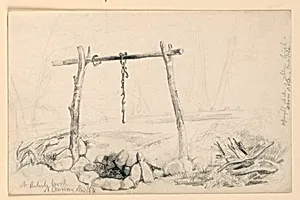
Outside Fireplace, North Conway, New Hampshire
August 1854
Classification
landscapes
Department
Smithsonian Collection
Museum
Smithsonian American Art Museum
Credit
Bequest of Erskine Hewitt
Accession Number
1942-50-176
Rights
Public Domain
About this artwork
Research in Progress
Art Historical Context
Daniel Huntington's *Outside Fireplace, North Conway, New Hampshire (August 1854) captures the rugged charm of New England's White Mountains a magnet for 19th-century American artists inspiration in nature's grandeur. Painted on-site during the summer of 1854, this landscape reflects the era's growing fascination with the wilderness, as painters ventured beyond urban studios to document unspoiled vistas. North Conway, nestled in New's White Mountain region, was a hotspot for the White Mountain School of artists, who celebrated its dramatic peaks, forests, and streams as symbols of national pride. Huntington (1816–1906), a versatile American painter renowned for portraits and historical scenes, occasionally turned to landscapes like this one early in his career. Though the medium remains unidentified amid ongoing research, the work exemplifies the meticulous observation of light and texture typical of mid-19th-century American plein air sketching. Housed in the Smithsonian American Art Museum through the bequest of Erskine Hewitt, it offers a glimpse into Huntington's exploratory phase before he rose to prominence as president of the National Academy of Design. This piece invites visitors to ponder the "outside fireplace"—likely a rustic hearth amid the wilds—as a nod to frontier life, blending human presence with sublime nature. A quiet testament to America's romantic landscape tradition, it reminds us how artists like Huntington helped forge a visual identity for the young nation.