
Medium
Classification
Department
Smithsonian Collection
Museum
Smithsonian American Art Museum
Credit
National Portrait Gallery, Smithsonian Institution; gift of Mr. and Mrs. Paul Mellon
Accession Number
S/NPG.74.39.4.47
Rights
Public Domain
Tags
Art Historical Context
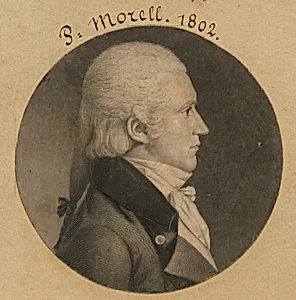
In 1802, French-born artist Charles Balthazar Févret de Saintémin created this striking print portrait of P. Morell, capturing the sitter's profile with remarkable precision. Saint-Mémin, who fled the French Revolution and settled in America, became renowned for his innovative approach to portraiture during the early republic era. Working primarily in Philadelphia, New York, and, D.C., he produced thousands of such images for America's emerging elite, documenting a young nation's leaders and citizens. The artwork exemplifies Saint-Mémin's signature technique: using a mechanical device called the physiognotrace—a precursor to modern pantographs—to trace a subject's silhouette accurately onto paper. He then cut stencils from these outlines, filling them with charcoal dust to create detailed profiles, often hand-colored and printed for wider distribution. This method allowed for affordable, lifelike miniatures that democratized portraiture, blending Enlightenment-era science with artistry. Housed in the Smithsonian American Art Museum as part of the National Portrait Gallery's collection (gift of Mr. and Mrs. Paul Mellon), *P. Morell* offers a window into early 19th-century American identity. Though details on Morell himself remain elusive, the portrait reflects the period's fascination with physiognomy—the belief that character could be read from facial features—making it a cultural artifact of personal and national self-fashioning.