
Page from the Mustard Seed Garden Manual of Painting
first edition printed in 1679
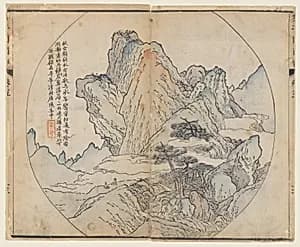
Medium
Circular fan-shaped woodblock print; ink and color on paper
Dimensions
9 5/8 x 11 13/16 in. (24.4 x 30 cm)
Classification
Prints
Culture & Period
China · Qing dynasty (1644–1911)
Department
Asian Art
Museum
Metropolitan Museum of Art, New York, NY
Credit
Rogers Fund, 1924
Accession Number
CP17
Rights
Public Domain
Tags
Art Historical Context
This exquisite page from the *Mustard Seed Garden Manual of Painting* (*Jieziyuan Huazhuan*), first printed 1679 during China's Qing dynasty, showcases a landscape attributed to the Southern Song master Li Songnian. As one of the most influential painting manuals in East Asian art history, it served as a comprehensive guide for aspiring artists, offering precise woodblock-printed models of compositions, brush techniques, and color applications. This circular fan-shaped print, in ink and color on paper, exemplifies the manual's role in democratizing elite painting traditions, making them accessible beyond imperial courts. The fan format—measuring 9⅝ × 11⅞ inches—highlights the portability and intimacy of Chinese fan painting, a popular medium for personal expression and gift-giving. Li Songnian's style, rooted in the monumental landscapes of the Song dynasty, is faithfully reproduced here through meticulous woodblock printing, which allowed for vibrant colors and fine details like mist-shrouded mountains and flowing rivers. Such techniques preserved classical ideals of harmony between humanity and nature, influencing generations of painters into the Qing era and beyond. Housed in the Metropolitan Museum of Art's Asian Art Department (Rogers Fund, 1924), this print not only captures Qing technical innovation but also embodies China's enduring reverence for artistic lineage, bridging centuries of landscape mastery. Visitors will appreciate its delicate beauty as a window into scholarly painting culture.