
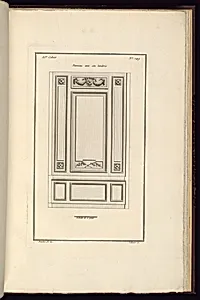
Panneau avec son lambris
Medium
Classification
Department
Smithsonian Collection
Museum
Smithsonian American Art Museum
Credit
Purchased for the Museum by the Advisory Council
Accession Number
1921-6-253-45
Rights
Public Domain
About this artwork
Research in Progress
Art Historical Context
Juste-François Boucher (6–1782), a talented French engraver and nephew the renowned Rococo master François Boucher, created *Panneau avec sonbris* around 1775. This print the elegance of 18th-century French decorative arts, depicting a paneled wall (*panneau*) complete with its ornate wainscoting (*lambris*). As the nephew of one of Europe's leading painters, Juste-François specialized in reproductive engravings, skillfully translating paintings and designs into prints that could be widely shared among artists, architects, and collectors. Printed during the waning years of the Rococo style and the rise of Neoclassicism, the work reflects the opulent interiors popular in aristocratic homes and salons. Prints like this one were invaluable for disseminating sophisticated design motifs across Europe and beyond, influencing furniture makers, interior decorators, and even transatlantic tastes. Its presence in the Smithsonian American Art Museum's collection—purchased by the Advisory Council—highlights its appeal to American audiences, bridging French luxury with emerging New World aesthetics. Though research on this piece is ongoing, *Panneau avec son lambris* exemplifies the technical precision of 18th-century printmaking, where intricate lines and shading brought architectural fantasies to life on paper. A delightful glimpse into Enlightenment-era refinement!