
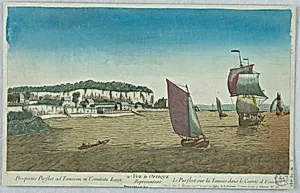
Peep-show, 21e Vue d/Optique Representant Prospectus Purfleet ad Tamesim in Comitatu Essex/Le Purfleet Sur la Tamise Dans le Comté d'Essex
ca. 1750
Medium
Classification
Department
Smithsonian Collection
Museum
Smithsonian American Art Museum
Credit
Gift of Mrs. Edward R. Wharton
Accession Number
1901-30-36
Rights
Public Domain
About this artwork
Research in Progress
Art Historical Context
Step into the enchanting world 18th-century optical illusions with *Peep-show, 21e Vue d'Optique Representant Prospectus Purfleet Tamesim in Comit Essex/Le Purfleet Sur Tamise Dans le Comé d'Essex*, a captivating print from around 1750. This bilingual-titled work depicts a scenic prospect of Purfleet, a riverside town on England's Thames in Essex County. Crafted as a "Vue d'Optique," it was designed for peep-show devices—popular wooden boxes with lenses that transformed flat prints into vivid, three-dimensional vistas, delighting viewers with an immersive sense of depth. These prints emerged during the Enlightenment era, when optical entertainments flourished among Europe's middle classes, offering affordable "virtual travel" to distant locales. The unknown artist's technique employed exaggerated linear perspective, bold shading, and intricate line work—hallmarks of engraving—to maximize the illusion when viewed through a lens. Such views bridged art and science, reflecting growing fascination with geography and tourism. Housed in the Smithsonian American Art Museum's Print Collection (gift of Mrs. Edward R. Wharton), this piece highlights the ingenuity of popular print culture. Though research continues, it evokes the thrill of discovery, inviting us to imagine peering through a peep-show lens at Georgian England's bustling river life.
About the Artist
Unknown
The artist designated as "Unknown" in our virtual museum's collection exemplifies a poignant chapter in art history: creators whose identities have faded into obscurity despite the enduring power of their work. With only one known artwork attributed to them in our holdings, this figure represents countless anonymous hands that shaped visual culture across centuries. Museums worldwide, including th...