
Pendant
Unknown Artist
12th century
Medium
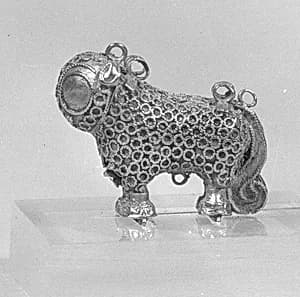
Sheet gold with filigree
Classification
Jewelry
Department
Islamic Art
Museum
Metropolitan Museum of Art, New York, NY
Credit
Gift of Alastair Bradley Martin, 1951
Accession Number
51.125.9
Rights
Public Domain
Tags
Art Historical Context
This exquisite 12th-century pendant, crafted from sheet gold adorned with intricate filigree, hails from the Islamic world and exemplifies the era's masterful metalworking traditions. Donated to the Metropolitan Museum of Art 1951 by Alastair Bradley Martin, it in the Islamic Art department classified as jewelry. Filigree—a delicate technique of twisting and soldering fine gold wires into ornate patterns—allowed artisans to create lightweight yet opulent designs, often suspended from necklaces for personal adornment. In the medieval Islamic context, such pendants held both aesthetic and possibly protective significance, worn as talismans or status symbols amid flourishing trade routes like the Silk Road. Gold, prized for its purity and luster in Islamic culture, symbolized wealth and divine beauty, while filigree work showcased the precision of workshops in regions from Persia to North Africa. This piece reflects the technical virtuosity of anonymous craftsmen whose innovations influenced jewelry across Eurasia. Today, it invites us to marvel at the enduring elegance of Islamic artistry, where form met function in harmonious gold filigree. (178 words)