
Pendant Design
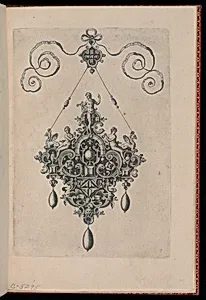
Classification
ornament
Department
Smithsonian Collection
Museum
Smithsonian American Art Museum
Credit
Purchased for the Museum by the Advisory Council
Accession Number
1921-6-469-7
Rights
Public Domain
About this artwork
Research in Progress
Art Historical Context
Hans Collaert the Elder (ca. 1530–1581), a prominent Flemish engraver from Antwerp, created this *Pendant Design* in 1581, the very year of his death. Working in the vibrant Northern Renaissance tradition, Collaert specialized in intricate designs for decorative arts, particularly jewelry and ornaments. Flanders during this era was a hub of artistic innovation under Spanish Habsburg rule, where goldsmiths and engravers collaborated to produce luxurious items for the nobility and elite. His works often served as precise models (modelli) for jewelers, bridging fine art and craftsmanship. As a pendant design classified as an ornament, this piece exemplifies the Renaissance fascination with wearable art—elegant jewels that combined symbolism, such as religious motifs or allegorical figures, with technical virtuosity. Pendants were status symbols, suspended from chains and showcasing the era's mastery of detailed engraving techniques, even if the exact medium here remains under study. Collaert's style reflects the Antwerp Mannerists' emphasis on elaborate patterns and symmetry, influencing jewelry across Europe. Acquired by the Smithsonian American Art Museum through its Advisory Council, this design offers a glimpse into 16th-century Flemish design culture. Ongoing research promises to reveal more about its motifs and production, inviting visitors to appreciate the delicate interplay of art and adornment in Renaissance life.