
Perpetual Calendar
Classification
ornament
Department
Smithsonian Collection
Museum
Smithsonian American Art Museum
Credit
Museum purchase through gift of E.F. Caldwell & Co.
Accession Number
1963-9-317
Rights
Public Domain
About this artwork
Research in Progress
Art Historical Context
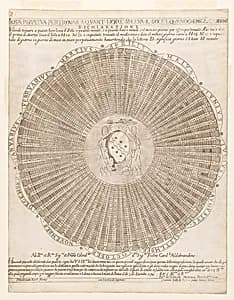
**Perpetual Calendar** *Ortensio Toro,, active 16th, 1594* Smithsonian American Art Museum into the inventive world of the Renaissance with *Perpetual Calendar*, crafted in 1594 by Ortensio Toro, an Italian active during the 16th century. This ornament, now housed in the Smithsonian American Museum's collection (museum purchase through the gift of E.F. & Co.), captures the era's passion for blending artistry with practical ingenuity. As a "perpetual calendar," it represents a timeless tool designed to track dates across years without reconfiguration, reflecting the period's growing interest in astronomy, mathematics, and mechanical precision. Though details of its medium remain under ongoing research, Toro's work aligns with Italian Renaissance traditions where everyday objects became ornate masterpieces. Ornaments like this often showcased exquisite metalwork, engraving, or ivory inlays, turning functional devices into symbols of intellectual sophistication and courtly elegance. In an age of discovery—from Galileo's early experiments to intricate clockworks—such pieces bridged art and science, delighting patrons who valued beauty in utility. Today, *Perpetual Calendar* invites us to marvel at 16th-century innovation. Its enduring design reminds visitors how Toro's subtle craftsmanship made time itself a work of art, preserving a slice of Italy's golden age for modern eyes.