
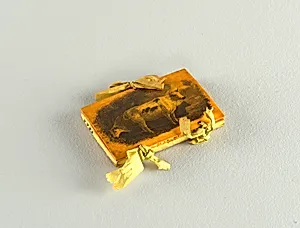
Pin cushion
1880
Classification
appliances & tools
Department
Smithsonian Collection
Museum
Smithsonian American Art Museum
Credit
Smithsonian American Art Museum
Accession Number
1990-153-13
Rights
Public Domain
About this artwork
Research in Progress
Art Historical Context
Step into the everyday ingenuity of 1880s America with this intriguing *Pin Cushion*, a humble yet essential household tool from the Smithsonian American Art's collection. Dating to 1880, it falls under the classification of appliances and tools, highlighting how ordinary objects captured the spirit of domestic life during the late Victorian era. While research on this piece is ongoing, it exemplifies the practical crafts that filled American homes, where sewing was a cornerstone of self-sufficiency and creativity. Pin cushions like this one served a vital purpose: holding straight pins and needles for mending clothes, crafting garments, or embroidery—a skill mastered by women across social classes. In an age before modern fasteners, such tools were indispensable, often handmade from fabric scraps, wool stuffing, and simple shapes like tomatoes or strawberries for easy access. This artifact reflects broader cultural shifts, including the rise of home sewing amid industrialization, blending utility with subtle artistry. Preserved in the Smithsonian's vast holdings, the *Pin Cushion* invites us to appreciate the artistry in anonymity. Though its maker remains unknown and medium awaits further study, it underscores how museums elevate functional items to reveal stories of labor, resourcefulness, and quiet innovation in 19th-century daily life. A small treasure with big historical whispers!
About the Artist
Unknown
The artist designated as "Unknown" in our virtual museum's collection exemplifies a poignant chapter in art history: creators whose identities have faded into obscurity despite the enduring power of their work. With only one known artwork attributed to them in our holdings, this figure represents countless anonymous hands that shaped visual culture across centuries. Museums worldwide, including th...