
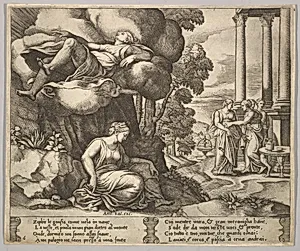
Plate 6: Zephir carrying off Psyche to an enchanted palace, from "The Fable of Psyche"
Medium
Engraving
Dimensions
sheet: 7 11/16 x 8 7/8 in. (19.5 x 22.5 cm)
Classification
Prints
Department
Drawings and Prints
Museum
Metropolitan Museum of Art, New York, NY
Credit
Gift of Harry G. Friedman, 1962
Accession Number
62.635.909
Rights
Public Domain
Tags
Art Historical Context
Behold Plate 6 from the Renaissance series *The Fable of Psyche*, a captivating engraving depicting Zephyrus, the gentle west wind, whisking the mortal Psyche away to an enchanted palace. Created between 1530 and 1560, this sheet measures 7 11/16 x 8 7/8 inches and captures a pivotal moment from the ancient Roman myth recounted in Apuleius's *The Golden Ass*. Here, Psyche, symbolizing the soul's trials and triumphs, is borne aloft amid swirling winds and ethereal architecture, evoking wonder and divine intervention. Attributed to the Master of the Die (likely the engraver), publisher Antonio Salamanca, and designer Michiel Coxie (I)—a Flemish artist influenced by Italian Renaissance masters—this print exemplifies the era's revival of classical mythology. Engravings like this were revolutionary for their precision and reproducibility, allowing intricate details—flowing drapery, dynamic motion, and fantastical palaces—to reach collectors across Europe. Coxie's elegant line work blends Northern detail with classical grace, making the myth accessible and visually enchanting. Housed in the Metropolitan Museum of Art's Drawings and Prints department (gift of Harry G. Friedman, 1962), this piece highlights women's central roles in Renaissance narratives, from Psyche's beauty to her perilous journey toward love and immortality. A testament to 16th-century artistry, it invites visitors to ponder the timeless allure of myth made tangible.
About the Artist
Master of the Die|Antonio Salamanca|Michiel Coxie (I) · 1525–1560
**Master of the Die** (fl. 1525–1560) was an anonymous Italian engraver and printmaker active primarily in Rome during the mid-16th century. Named for the distinctive small die he used to sign his prints—a tiny emblematic mark that became his moniker—this elusive artist remains unidentified despite scholarly proposals linking him to figures like Benedetto Verino, Giovanni Francesco Zabello, Tommas...