
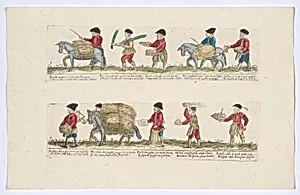
Plate 9 depicting the trades of Rome, here including vendors of water, sardines, melons etc, from the 'Descrición de las artes que se llaman para los calles de la ciudad de Roma'
ca. 1770–1800
Medium
Engraving with hand coloring
Dimensions
Sheet: 9 5/8 × 15 3/16 in. (24.5 × 38.5 cm) Plate (Top): 2 3/4 × 11 1/4 in. (7 × 28.5 cm) Plate: 3 1/8 × 11 1/4 in. (8 × 28.5 cm)
Classification
Prints
Department
Drawings and Prints
Museum
Metropolitan Museum of Art, New York, NY
Credit
Purchase, Ann and Matthew Nimetz Gift, 2022
Accession Number
2022.79
Rights
Public Domain
Art Historical Context
This engaging engraving captures the lively street life of 18th-century Rome through Plate 9 of the series *Descrición de las artes que se llaman para los calles de la ciudad de Roma*. Created around 1770–1800 by Giovanni Ambrogio Brambilla and published by the Remondini firm, it showcases vendors offering everyday goods such as water, sardines, and melons. Such prints documented the bustling trades that animated the city’s public spaces, reflecting the social and economic rhythms of Roman daily life during a period when street commerce was central to urban culture. The work’s medium—an engraving enhanced with delicate hand coloring—allowed for both precise detail and vibrant appeal, making these scenes accessible to a wide audience. Brambilla’s careful linework highlights the figures’ gestures and wares, turning ordinary transactions into charming vignettes that preserve a sense of Rome’s historic character. Acquired by the Metropolitan Museum of Art in 2022, this print offers modern viewers a window into the city’s past, celebrating the dignity of labor and the colorful spectacle of its streets.