
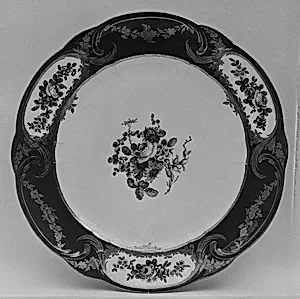
Plate (assiette à palmes) (1 of 102) (part of a service)
Medium
Soft-paste porcelain
Dimensions
Diameter: 9 3/4 in. (24.8 cm)
Classification
Ceramics-Porcelain
Culture
French, Sèvres
Department
European Sculpture and Decorative Arts
Museum
Metropolitan Museum of Art, New York, NY
Credit
Bequest of Emma T. Gary, 1934
Accession Number
37.20.69
Rights
Public Domain
Tags
Art Historical Context
This exquisite *Plate (assiette àmes)*, crafted in 1767 by the Sèvres Manuf with gilding by Charles-Louis Méreaud exemplifies the pinnacle of 18th-century French porcelain. Measuring 9 3/4 inches in diameter, it part of an opulent service of 102 pieces, showcasing the manufactory's mastery of soft-paste porcelain delicate, creamy material prized for its translucency and fine detail before the shift to harder paste in the late 1760s. Sèvres, under royal patronage during Louis XV's reign, produced such luxury goods for the French elite, blending technical innovation with lavish decoration. The plate's design likely features intricate rose motifs, a hallmark of Rococo elegance, with Méreaud's skilled gilding adding shimmering gold accents that elevate its ornamental appeal. Soft-paste porcelain allowed for vibrant colors and subtle modeling, techniques that made Sèvres wares highly sought after across Europe. As part of the Metropolitan Museum of Art's European Sculpture and Decorative Arts collection—bequeathed by Emma T. Gary in 1934—this piece invites visitors to appreciate the cultural prestige of French ceramics, symbols of refinement and courtly taste in the Age of Enlightenment.
About the Artist
Sèvres Manufactory|Charles-Louis Méreaud · 1740–present
The Sèvres Manufactory, one of Europe's premier porcelain producers, was established in 1740 as the Manufacture de Vincennes under the patronage of Queen Marie Leszczyńska, who sought to rival Meissen and Chantilly porcelains with French soft-paste innovations. Initially a private venture, it relocated to Sèvres in 1756 in a purpose-built facility designed by architect Laurent Lindet near Madame d...