
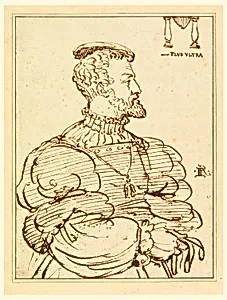
Portrait of the Emperor Charles V
Classification
figures
Department
Smithsonian Collection
Museum
Smithsonian American Art Museum
Credit
Bequest of Erskine Hewitt
Accession Number
1938-57-246
Rights
Public Domain
About this artwork
Research in Progress
Art Historical Context
Behold the *Portrait of the Emperor Charles*, a rare self-portrait created by the emperor himself around 1530–35. Born in Ghent in 1500, Charles V a towering figure of the Renaissance era—a Netherlandish ruler who inherited and expanded one of history's largest empires, spanning the Holy Roman Empire,, the Netherlands, and vast territories in the Americas. At the time of this work, in his early thirties, Charles was at the height of his power, navigating wars, religious upheavals like the Protestant Reformation, and diplomatic triumphs such as the 1530 Imperial Diet at Augsburg. Classified among figural works in the Smithsonian American Art Museum's collection (bequest of Erskine Hewitt), this piece offers a glimpse into the personal side of a monarch better known for conquests than creativity. Though the medium remains under study—"Research in Progress"—it underscores the Renaissance ideal of the cultured ruler, echoing the era's humanist emphasis on individual expression. Charles, multilingual and well-traveled, occasionally sketched, making this portrait a precious artifact of royal introspection amid his era's turbulent politics. Displayed in the Smithsonian Collection, it invites us to ponder a leader's self-image: resolute, perhaps contemplative, capturing the man behind the crown in an age of profound global change.