
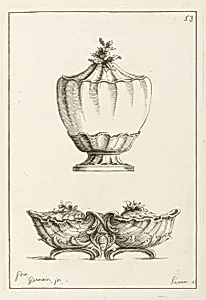
Pot à Sucre
Classification
metalwork
Department
Smithsonian Collection
Museum
Smithsonian American Art Museum
Credit
Purchased for the Museum by the Advisory Council
Accession Number
1921-6-313-53
Rights
Public Domain
About this artwork
Research in Progress
Art Historical Context
**Pot à Sucre** *Pierre Germain (French, 1703–1783), 1748* *Metalwork, Smithsonian American Art* Crafted in 1748 by the French silversmith Pierre, *Pot à Sucre*—meaning "sugar pot"—exemplifies the opulent metalwork of mid-18th-century France Germain, a master goldsmith active during the reign of Louis XV, was for his intricate designs that captured the playful elegance of the Rococo style This period favored asymmetrical forms, scrolling motifs, and delicate embellishments, transforming everyday objects like sugar pots into symbols of luxury and refinement. Though the exact medium remains under study, its classification as metalwork suggests finely wrought silver or gilt pieces, hallmarks of Germain's workshop. In the opulent courts of Versailles, such vessels were essential for serving sweetened beverages, reflecting the era's fascination with exotic imports like sugar from the Americas and Caribbean colonies. Germain's work bridged functionality and artistry, often featuring chased surfaces and engraved details that showcased virtuoso craftsmanship. Acquired by the Smithsonian American Art Museum through its Advisory Council, this piece highlights transatlantic exchanges in taste and trade. Today, *Pot à Sucre* invites us to appreciate how everyday rituals were elevated to high art, offering a glimpse into Enlightenment-era sophistication amid ongoing research into its techniques and provenance. (198 words)