
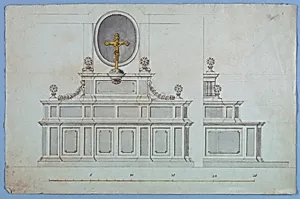
Project for a Case in a Vestry with Alternative Suggestions
1770–1800
Classification
architecture
Department
Smithsonian Collection
Museum
Smithsonian American Art Museum
Credit
Museum purchase through gift of various donors
Accession Number
1901-39-541
Rights
Public Domain
About this artwork
Research in Progress
Art Historical Context
Step into the late 18th century with *Project for a Case in a Vestry with Alternative Suggestions*, a fascinating architectural design from 1770–1800 now housed in the Smithsonian American Art Museum. Created by an unknown artist, this work falls under the architecture classification and reflects the practical ingenuity of early American craftsmanship. A "vestry" refers to a church room used for storing vestments or holding meetings, suggesting this is a proposal for a functional case—perhaps a cabinet or storage unit—tailored to ecclesiastical needs. What makes this piece intriguing is its inclusion of alternative suggestions, hinting at an iterative design process common in the colonial and early Federal periods. During this era, as America transitioned from British colonial rule toward nationhood, church interiors blended functionality with emerging neoclassical influences, prioritizing utility in community spaces. Though the medium remains unidentified and research is ongoing, the project's survival underscores the value placed on preserving everyday architectural ideas. Acquired through museum purchase with gifts from various donors, this artifact offers a glimpse into uncelebrated aspects of American design history. It invites us to ponder how simple furnishings shaped sacred spaces, bridging art, architecture, and daily devotion in a young republic. (198 words)
About the Artist
Unknown
The artist designated as "Unknown" in our virtual museum's collection exemplifies a poignant chapter in art history: creators whose identities have faded into obscurity despite the enduring power of their work. With only one known artwork attributed to them in our holdings, this figure represents countless anonymous hands that shaped visual culture across centuries. Museums worldwide, including th...