
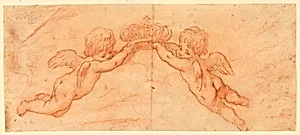
Putti with Crown
1650–1850
Classification
ornament
Department
Smithsonian Collection
Museum
Smithsonian American Art Museum
Credit
Museum purchase through gift of various donors
Accession Number
1901-39-1352
Rights
Public Domain
About this artwork
Research in Progress
Art Historical Context
"Putti with Crown" a charming ornament from the Smithsonian American Art, dating to the broad span of 1650–1850. Putti—those delightful, plump, winged cherubs popularized in Renaissance and Baroque artoften symbolize innocence, joy, and divine playfulness. Here, the unknown artist captures one or more putti interacting with a crown, evoking themes of celebration, victory, or heavenly reward. As a decorative ornament, it likely adorned furniture, architecture, or household items, reflecting the era's love for ornate embellishments in both European and early American contexts. This piece bridges the exuberant Baroque style, with its dynamic forms and emotional expressiveness, and the more refined Neoclassicism of the later 18th and early 19th centuries. Ornaments like this were essential to everyday luxury, showcasing craftsmanship that blended artistry with functionality. Acquired through museum purchases funded by generous donors, it highlights the Smithsonian's commitment to preserving such evocative artifacts. Research on "Putti with Crown" is ongoing, adding to its allure—each discovery promises deeper insights into its origins and cultural role. Visitors, imagine these cherubs crowning a mantelpiece in a colonial home, whispering tales of artistry across centuries!
About the Artist
Unknown
The artist designated as "Unknown" in our virtual museum's collection exemplifies a poignant chapter in art history: creators whose identities have faded into obscurity despite the enduring power of their work. With only one known artwork attributed to them in our holdings, this figure represents countless anonymous hands that shaped visual culture across centuries. Museums worldwide, including th...