
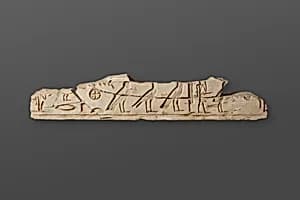
Relief fragment, tomb of Mereri
Unknown Artist
ca. 2100–2030 B.C.
Medium
Limestone
Dimensions
H. 13.5 × W. 70.2 × D. 6 cm (5 5/16 × 27 5/8 × 2 3/8 in.)
Classification
Relief fragment, tomb of Mereri
Period
First Intermediate Period
Department
Egyptian Art
Museum
Metropolitan Museum of Art, New York, NY
Credit
Gift of Egypt Exploration Fund, 1898
Accession Number
98.4.3k
Rights
Public Domain
Art Historical Context
This limestone relief fragment from the tomb Mereri dates to Egypt's First Intermediate Period (. 2100–2030 B.C.), specifically Dynasty 9, a time of political fragmentation following the Old Kingdom's grandeur. Measuring just 13.5 cm high but stretching 70.2 cm wide, it offers a glimpse into funerary art from a provincial elite tomb, likely near Heracleopolis, the era's short-lived power center. Such fragments preserve scenes of daily life, offerings, or rituals, ensuring the deceased's eternal provision in the afterlife—a core Egyptian belief. Carved in low relief, a technique perfected in earlier dynasties but adapted here with simpler, more provincial styles, the limestone medium allowed for fine detailing and original polychrome painting, now faded. These tombs reflect cultural continuity amid chaos, blending Old Kingdom traditions with emerging Middle Kingdom realism. Mereri, possibly a local official, commissioned this to affirm his status and spiritual security. Acquired by the Metropolitan Museum of Art in 1898 as a gift from the Egypt Exploration Fund, this piece highlights the era's resilience. Visitors, imagine touching ancient stone etched with hopes for eternity— a poignant survivor from a turbulent age.