
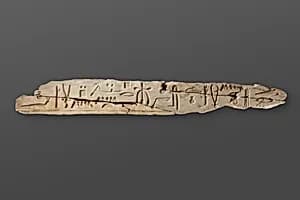
Relief fragment, tomb of Mereri
Unknown Artist
ca. 2100–2030 B.C.
Medium
Limestone
Dimensions
H. 11.6 × W. 91 × D. 7.3 cm (4 9/16 × 35 13/16 × 2 7/8 in.)
Classification
Relief fragment, tomb of Mereri
Period
First Intermediate Period
Department
Egyptian Art
Museum
Metropolitan Museum of Art, New York, NY
Credit
Gift of Egypt Exploration Fund, 1898
Accession Number
98.4.3j
Rights
Public Domain
Art Historical Context
This delicate limestone relief fragment hails from the tomb of Mer, a figure from Egypt's First Intermediate Period (. 2100–2030 B.C.), specifically Dynasty 9. Measuring a slender 11.6 cm high and nearly a meter wide, it once adorned the walls of a provincial tomb, likely near Heracleopolis, the era's political heart. Crafted by an unknown ancient artisan, such fragments offer rare glimpses into a time of fragmentation following the Old Kingdom's grandeur, when local rulers commissioned tombs to affirm their status and ensure eternal provisions. In Egyptian funerary art, limestone reliefs like this were meticulously carved in low relief, often painted with vibrant mineral pigments (now faded), depicting offering scenes, daily life, or hieroglyphic inscriptions to sustain the deceased in the afterlife. This piece exemplifies continuity of tradition amid chaos, highlighting Mereri's role—possibly a local official—through standardized motifs that bridged Old Kingdom mastery with Middle Kingdom revival. Its survival underscores the resilience of ancient beliefs in immortality. Acquired by the Metropolitan Museum of Art in 1898 via the Egypt Exploration Fund, this artifact invites us to ponder the human stories etched in stone over 4,000 years ago, bridging visitors to a world where art served both piety and power.