
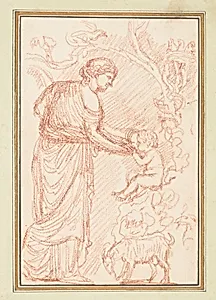
Robed woman with two children and a goat
Classification
ornament
Department
Smithsonian Collection
Museum
Smithsonian American Art Museum
Credit
Gift of Noah Butkin
Accession Number
1977-110-4-42
Rights
Public Domain
About this artwork
Research in Progress
Art Historical Context
**Robed Woman with Two Children and a Goat***Jean-Robert Ango,, active in Rome 1759–1770, d. 1773, ca. 1759–70* This charming ornament captures a tender family moment: a robed woman accompanied by two children and a playful goat. Created by French artist Jean-R Ango during his active years in Rome, the work reflects the vibrant artistic exchange between France and Italy in the mid-18th century. Ango, who flourished in the Eternal City amid the Grand Tour era, likely drew inspiration from Rome's classical heritage and pastoral traditions, evoking scenes of everyday life infused with warmth and serenity. Classified as an ornament in the Smithsonian American Art Museum's collection—generously gifted by Noah Butkin—this piece highlights the decorative arts' role in 18th-century interiors. Though the medium remains unidentified amid ongoing research, its intimate subject suggests it adorned a private space, blending human tenderness with nature's whimsy. The goat, a nod to rustic idylls popular in European art, adds a lively, symbolic touch, reminding us of art's power to celebrate simple joys. Visitors, imagine this delicate ornament gracing a salon in Rome— a window into Ango's world bridging French elegance and Italian vitality. Research continues to uncover more about its creation and craft.