
Salmon P. Chase
Medium
Classification
Department
Smithsonian Collection
Museum
Smithsonian American Art Museum
Credit
National Portrait Gallery, Smithsonian Institution
Accession Number
NPG.85.60
Rights
Public Domain
Tags
Art Historical Context
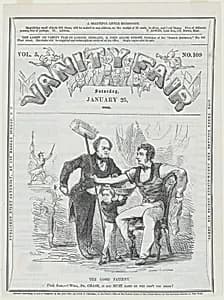
In 1862, amid the tumult of the Civil War, the Bobbett & Hooper Woodaving Co.—a New York firm renowned for its precise reproductions—created this striking portrait print of Salmon P. Chase. As a wood engraving, it exemplifies a 19th-century technique that allowed for intricate details on boxwood blocks, making high-quality images affordable for newspapers, books, and homes. Housed in the Smithsonian American Art Museum's National Portrait Gallery, this print captures Chase in an interior setting with everyday objects like a chair, table, bowl, broom, and knife, evoking a sense of domestic authority amid national crisis. Salmon Portland Chase, an Ohio lawyer and fervent abolitionist, rose to prominence as U.S. Senator, Lincoln's Secretary of the Treasury (1861–1864), and briefly Secretary of State before becoming Chief Justice of the Supreme Court (1864–1873). A perennial presidential candidate, he championed emancipation and fiscal policies that funded the Union war effort, including issuing greenbacks. Symbolic elements like Uncle Sam nod to his patriotic stature, blending personal portraiture with political symbolism. This artwork offers a window into Chase's era, highlighting how prints democratized celebrity and ideology, immortalizing leaders for an engaged public. Its detailed realism underscores wood engraving's role in shaping American visual culture during pivotal times.