
Saucer (part of a service)
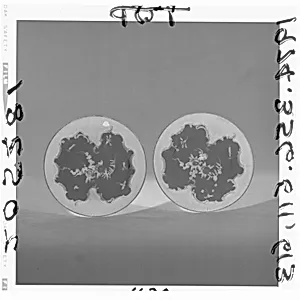
Medium
Soft-paste porcelain
Dimensions
Diameter: 5 1/4 in. (13.3 cm)
Classification
Ceramics-Porcelain
Culture
British, Worcester
Department
European Sculpture and Decorative Arts
Museum
Metropolitan Museum of Art, New York, NY
Credit
The Lesley and Emma Sheafer Collection, Bequest of Emma A. Sheafer, 1973
Accession Number
1974.356.611
Rights
Public Domain
Art Historical Context
This delicate saucer, part of a larger porcelain service produced by the Worcester factory during the esteemed Dr. Wall period around 1770, exemplifies the golden age of British ceramics. Founded in 1751, the Worcester Porcelain Works—under the leadership of Dr. John Wall, a pioneering chemist—became a powerhouse in Europe’s race to rival Chinese porcelain imports. These pieces were crafted for affluent households, blending functionality with elegance for tea and coffee rituals that defined 18th-century social life. Made from soft-paste porcelain—a innovative European blend of clay and ground glass fired at lower temperatures than true hard-paste—this 5¼-inch saucer highlights Worcester’s technical mastery. The factory’s “Dr. Wall” era is renowned for its durable bodies, vibrant underglaze transfer printing, and hand-painted enamels, often featuring pastoral scenes, exotic birds, or floral motifs inspired by Meissen and Sèvres. Though specific decoration details vary, such services showcased Britain’s growing industrial prowess and taste for refined domestic luxury. Now in The Metropolitan Museum of Art’s European Sculpture and Decorative Arts collection, gifted through the Lesley and Emma Sheafer bequest in 1973, this saucer invites us to savor the artistry of a bygone era—where chemistry met creativity in every graceful curve.
About the Artist
Dr. Wall Period|Worcester factory (British| ) · 1751 | –2008 |
British, 1751–2008|