
Scene from a Drama "Hoshiai Nagoya" Performed at the Nakamura Theatre
probably 1709
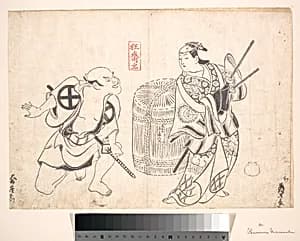
Medium
Woodblock print; ink and color on paper
Dimensions
10 3/8 x 14 3/4 in. (26.4 x 37.5 cm)
Classification
Prints
Culture & Period
Japan · Edo period (1615–1868)
Department
Asian Art
Museum
Metropolitan Museum of Art, New York, NY
Credit
Rogers Fund, 1918
Accession Number
JP541
Rights
Public Domain
Tags
Art Historical Context
Step into the vibrant world of Edo-period Japan with Okumura Masanobu's *Scene from a Drama "Hoshiai Nagoya" Performed at the Nakamura Theatre*, likely created around 1709. This woodblock print, rendered in ink and color on paper (10 3/8 x 14 3/4 in.), captures a dramatic moment from a kabuki performance at one of Tokyo's most famed theaters. Kabuki, with its exaggerated poses, elaborate costumes, and all-male casts, was a cornerstone of popular entertainment, drawing crowds eager for tales of valor and romance. Masanobu, a pioneering ukiyo-e artist active in early 18th-century Japan, specialized in yakusha-e—prints celebrating actors' star power. His innovative techniques, including early experiments with multi-block color printing like benizuri-e (rose-tinted prints), brought theatrical scenes to life for everyday viewers. This work reflects the "floating world" of urban pleasures, making high art accessible and fueling a print-buying craze among Edo's merchants and samurai. Housed in the Metropolitan Museum of Art's Asian Art Department (Rogers Fund, 1918), this print offers a window into Japan's cultural boom during the Edo period (1615–1868), when theater prints immortalized fleeting performances and turned actors into celebrities. A delightful glimpse of history's stage!
About the Artist
Okumura Masanobu · 1686–1764
Japanese, 1686–1764