
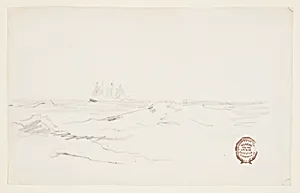
Schooner Near a Rocky Coast
Classification
seascapes
Department
Smithsonian Collection
Museum
Smithsonian American Art Museum
Credit
Gift of Charles Savage Homer, Jr.
Accession Number
1912-12-3
Rights
Public Domain
About this artwork
Research in Progress
Art Historical Context
Winslow Homer, one of America's foremost Realist painters (1836–1910), captures the raw drama of the sea in *Schooner Near a Coast*, created around 1880. By this time, Homer had retreated to his Prouts Neck, Maine studio where he immersed himself in depicting the Atlantic's untamed power. This seascape exemplifies his shift toward monumental marine subjects, portraying a lone schooner battling rugged coastal cliffs and turbulent waves—a theme that reflected the perilous lives of fishermen and sailors in the late 19th century. Homer's masterful compositions emphasize nature's sublime force, with bold contrasts of light and shadow heightening the tension between human endeavor and elemental might. Though the medium remains unidentified amid ongoing research, his seascapes often employed oil or watercolor to convey motion and atmosphere with unflinching realism, influencing generations of American artists. Generously gifted to the Smithsonian American Art Museum by Charles Savage Homer, Jr.—likely a family connection—this work resides in the Smithsonian Collection. It invites visitors to ponder the enduring American fascination with the sea's majesty and peril, a cornerstone of Homer's legacy.