
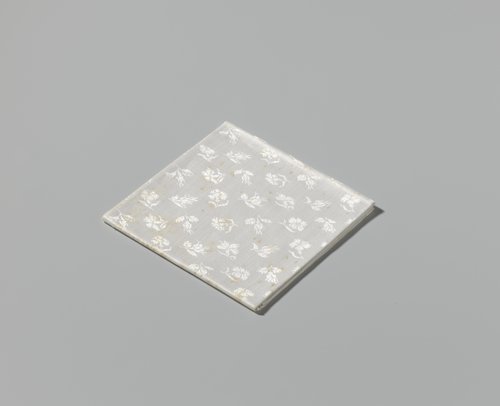
Servet met gestrooide snoffels en rozenknoppen, randen met takken
c. 1820 - c. 1830
Medium
linen (material)
Dimensions
86.5; 82
Rights
Public Domain
About this artwork
Servet van wit linnen met een patroon van gestrooide snoffeltjes en rozenknoppen, randen rondom met (?)takken. Merk CW 12.
Art Historical Context
This exquisite anonymous linen napkin, titled *Servet met gestoide snoffels en rozenknoppen, randen met takken dates to around 1820–1830. Measuring approximately 82 cm high by 86.5 cm wide, it features a delicate white-on-white pattern of scattered snuff boxes (snoffeltjes) and rosebuds across the center, framed by borders of intertwining branches. A subtle maker's or inventory mark, "CW 12," adds a personal touch, hinting at its origins in a Dutch household. Crafted from fine white linen—a prized material for table linens in early 19th-century Europe—this piece showcases whitework embroidery, a technique where fine linen threads create intricate, tonal designs visible in raking light. Snuff boxes, popular accessories among the era's middle and upper classes, reflect contemporary fashion, while rosebuds evoke enduring floral motifs symbolizing beauty and domestic virtue. Such napkins were often handmade by women, blending utility with artistry in the tradition of samplers and household textiles. As a window into everyday Regency-era life, this servet highlights the cultural role of needlework in Dutch textile traditions, preserving motifs of leisure and nature. Its preservation offers visitors a tactile glimpse into the refined domestic world of two centuries ago.
About the Artist
anonymous
In the vast tapestry of art history, "Anonymous" stands not as a singular individual but as a collective designation for countless unidentified creators whose works have endured across millennia. These artists, spanning prehistoric cave painters to medieval illuminators and folk craftsmen, produced the foundational layers of human visual culture. Prior to the Renaissance, when individual fame emer...