
Servet van wit linnendamast
Unknown Artist
ca. 1900 - ca. 1925
Medium
damask
Dimensions
106.5; 85.5
Rights
Public Domain
About this artwork
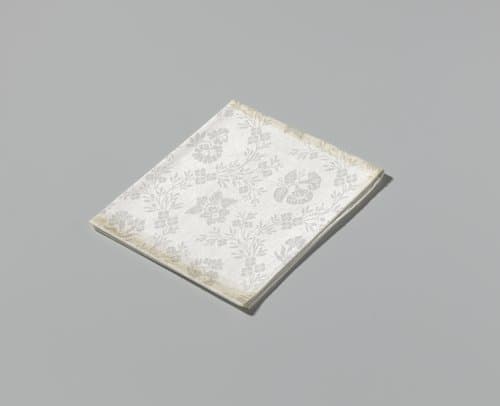
Wit linnendamasten servet met een patroon van een bloemtakje tussen (?) takken, bloemrand en patrijzen in de hoeken, merk CB.
Art Historical Context
Behold the elegant *Servet van wit lendamast*, a stunning white linen damask napkin around 1900 to 1925. Measuring approximately 106.5 cm high by 85.5 cm wide, this generous piece features a delicate woven pattern: a central flower sprig nestled between branching stems (possibly stylized foliage), framed by a floral border and partridges perched in each corner. The subtle sheen of damask weaving—achieved by reversing the warp weft threads—creates a reversible design that catches the light beautifully, highlighting its luxurious craftsmanship. Produced during the early 20th century, this napkin reflects the enduring tradition of European table linens, particularly in the Netherlands or Flanders, where fine damask was a hallmark of bourgeois households. At a time when formal dining symbolized social status, such pieces were essential for grand meals, blending practicality with artistry. The motifs evoke nature's bounty—delicate blooms for grace and partridges, game birds symbolizing the hunt, suggesting themes of abundance and leisure. Bearing the maker's mark "CB," this anonymous work exemplifies the skill of Jacquard looms, which enabled complex patterns without hand-weaving. Though everyday in its function, it whispers of a refined era, inviting us to appreciate the quiet artistry in domestic textiles.