
Sheath
ca. 1650
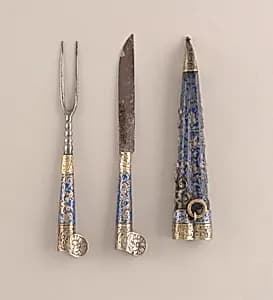
Classification
cutlery
Department
Smithsonian Collection
Museum
Smithsonian American Art Museum
Credit
The Robert L. Metzenberg Collection, gift of Eleanor L. Metzenberg
Accession Number
1985-103-62-a
Rights
Public Domain
About this artwork
Research in Progress
Art Historical Context
### Sheath, ca. 1650 Nestled in the Smithsonian American Art Museum's collection this enigmatic *Sheath* dates to around 1650, a pivotal era in early colonial America. Crafted during a time when European settlers were establishing footholds in the New World, such objects reflect the practical ingenuity of 17th-century life. As a piece of cutlery, it likely served as a protective covering for knives or blades—essential tools for survival, dining, and trade in rudimentary colonial households. Though the artist and medium remain unknown, its classification elevates it beyond mere utility, hinting at skilled craftsmanship that blended form and function. In an age before mass production, items like this sheath showcased regional workshops' expertise, possibly incorporating engraving, carving, or inlay techniques to add subtle elegance. Its presence in the museum underscores how everyday artifacts from the 1600s capture the grit and creativity of America's formative years. Generously gifted from The Robert L. Metzenberg Collection by Eleanor L. Metzenberg, this sheath is part of ongoing research at the Smithsonian. As scholars uncover more, it promises deeper insights into colonial material culture—reminding us that history often hides in the humble details of daily life. (198 words)
About the Artist
Unknown
The artist designated as "Unknown" in our virtual museum's collection exemplifies a poignant chapter in art history: creators whose identities have faded into obscurity despite the enduring power of their work. With only one known artwork attributed to them in our holdings, this figure represents countless anonymous hands that shaped visual culture across centuries. Museums worldwide, including th...