
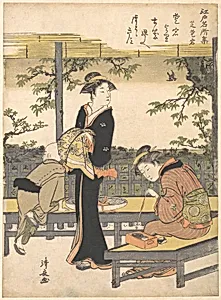
Shiba: Atago|Atago Hill at Shiba
ca. 1783
Medium
Woodblock print; ink and color on paper
Dimensions
10 7/16 x 7 5/8 in. (26.5 x 19.4 cm)
Classification
Prints
Culture & Period
Japan · Edo period (1615–1868)
Department
Asian Art
Museum
Metropolitan Museum of Art, New York, NY
Credit
The Howard Mansfield Collection, Purchase, Rogers Fund, 1936
Accession Number
JP2597
Rights
Public Domain
Tags
Art Historical Context
Torii Kiyonaga's *Shiba: Atago|Atago Hill at Sh* (ca. 1783) captures the elegance of everyday life in Edo-period Japan (1615–1868), during a time of urban prosperity and cultural flourishing in what is now Tokyo. This woodblock print part of a series depicting famous places in Edo, shows graceful women strolling amid trees on Atago Hill in the Shiba district—a popular spot for leisure and cherry blossom viewing. Kiyonaga a leading figure in the ukiyo-e ("pictures of the floating world") tradition, specialized in bijin-ga, or "beautiful women" prints, blending subtle storytelling with the vibrancy of city pleasures. Printed with ink and color on paper, the work exemplifies the woodblock technique's mastery: carvers and printers collaborated to layer vivid hues and fine lines, creating affordable art for a growing merchant class. At just 10 7/16 x 7 5/8 inches, its intimate scale invites close viewing, highlighting Kiyonaga's fluid poses, delicate fabrics, and harmonious integration of figures with nature—women framed by trees in a poised, almost theatrical composition. From The Metropolitan Museum of Art's Howard Mansfield Collection, this print reflects Edo Japan's cultural obsession with transience and beauty, offering a window into a world where urbanites escaped routines amid scenic hills. A timeless gem of Asian printmaking!
About the Artist
Torii Kiyonaga · 1752–1815
Torii Kiyonaga, born Sekiguchi Shinsuke in 1752 in Uraga, Sagami Province, was the son of an Edo bookseller who owned tenements near a bustling fish market. At age 14 in 1765, he began his apprenticeship under Torii Kiyomitsu, the third-generation head of the prestigious Torii school of ukiyo-e, renowned for kabuki theater illustrations and signage. Adopted into the Torii family, Kiyonaga succeede...