
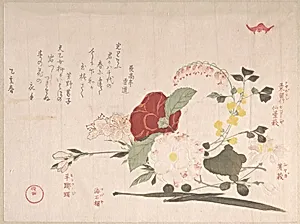
『春雨集』 摺物帖窪俊満画 クサボタン、萩、シャ ガ、ツバキ、モチツバキ|Spring Rain Collection (Harusame shū), vol. 2: Cut Flowers: Clematis, Bush Clover, Iris, Camellia, and Azalea
1815 (Year of the Ox)
Medium
Privately published woodblock prints (surimono) mounted in an album; ink and color on paper
Dimensions
8 5/16 x 11 1/16 in. (21.1 x 28.1 cm)
Classification
Prints
Culture & Period
Japan · Edo period (1615–1868)
Department
Asian Art
Museum
Metropolitan Museum of Art, New York, NY
Credit
H. O. Havemeyer Collection, Bequest of Mrs. H. O. Havemeyer, 1929
Accession Number
JP2155
Rights
Public Domain
Tags
Art Historical Context
Step into the delicate world of Edo-period Japan with *Spring Rain Collection (Harus shū)*, volume 2, by Kubo Shun, created in 1815. This exquisite album features woodblock prints of cut flowers—clematis, bush clover, iris, camellia, andalea—rendered in vibrant inks and colors on paper. a intimate 8½ x 11 inches, privately published *surimono* prints the transient beauty of spring blooms, evoking the poetic spirit of the season's gentle rains. Shunman, a master of ukiyo-e traditions, elevated *surimono*—luxurious, limited-edition prints often commissioned for poetry gatherings or New Year's celebrations—through his refined depictions of nature. Produced during the Edo period (1615–1868), when woodblock printing flourished in Japan, these works showcase meticulous techniques like subtle gradations of color (*bokashi*) and precise carving to mimic the soft textures of petals and leaves. Unlike mass-produced prints, *surimono* were artisanal treasures, blending art with haiku-like elegance. Housed in the Metropolitan Museum of Art's H. O. Havemeyer Collection, this album reflects Japan's profound cultural reverence for flowers as symbols of life's ephemerality, inviting viewers to savor nature's quiet poetry amid urban bustle. A perfect gem for flower lovers and print enthusiasts alike! (198 words)
About the Artist
Kubo Shunman · 1757–1820
Japanese, 1757–1820