
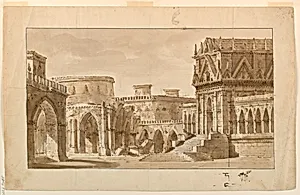
Stage Design, Gothic Palace, Church, and Fortress
ca. 1800
Medium
theater
Classification
theater
Department
Smithsonian Collection
Museum
Smithsonian American Art Museum
Credit
Museum purchase through gift of various donors and from Eleanor G. Hewitt Fund
Accession Number
1938-88-200
Rights
Public Domain
About this artwork
Research in Progress
Art Historical Context
Behold the evocative *Stage Design, Gothic Palace, Church, and* by Angelo Toselli (ca. 1765?–1826), a captivating work from around 1800 now housed in the Smithsonian American Museum. Created as a theatrical backdrop, this piece exemplifies the intricate scenic designs that brought dramatic worlds to life on European stages during the late Enlightenment and early Romantic eras. Toselli, an Italian artist specializing in theater scenery, captured a fantastical trio of Gothic architecture—towering palaces, ornate churches, and imposing fortresses—evoking mystery and grandeur. In the theater world of the early 19th century, such designs were pivotal for immersion, using perspective tricks and atmospheric shading to transform flat canvases into three-dimensional illusions under footlights. Gouache or watercolor on paper, typical for these ephemeral yet masterful models, allowed quick revisions for productions. This artwork reflects the era's fascination with medieval Gothic motifs, blending historical revival with operatic spectacle. Though research continues, Toselli's design highlights theater's role as a cultural mirror, transporting audiences to imagined realms. A museum purchase via donors and the Eleanor G. Hewitt Fund, it invites us to ponder the artistry behind the curtain. (198 words)