
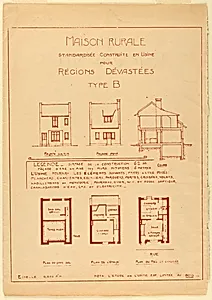
Standardized Rural House
Medium
architecture
Classification
architecture
Department
Smithsonian Collection
Museum
Smithsonian American Art Museum
Credit
Gift of Madame Hector Guimard
Accession Number
1956-78-1-64
Rights
Public Domain
About this artwork
Research in Progress
Art Historical Context
Hector Guimard, the renowned French architect (1867–1942) best known for his sinuous Art Nouveau designs like the iconic Paris Métro entrances, created *Standardized Rural House* in 1920. This architectural model represents a practical pivot amid post-World War I reconstruction efforts in France, where affordable housing was urgently needed in rural areas devastated by conflict. Guimard's design emphasized standardization and efficiency, moving away from his earlier organic flourishes toward functional modernism. As a model preserved in the Smithsonian American Art Museum's collection—graciously gifted by Madame Hector Guimard—it highlights the era's push for prefabricated, scalable solutions to social housing challenges. Though research on this piece is ongoing, it underscores Guimard's versatility, blending his innovative spirit with real-world utility. Visitors can appreciate how such visionary architecture addressed pressing human needs, bridging Art Nouveau elegance with emerging 20th-century pragmatism.