
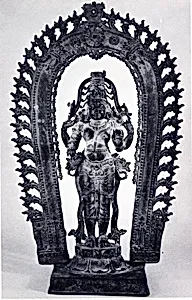
Standing Shiva
Unknown Artist
ca. 13th century
Medium
Bronze
Dimensions
H. 17 in. (43.2 cm)
Classification
Sculpture
Culture
India (Kerala)
Department
Asian Art
Museum
Metropolitan Museum of Art, New York, NY
Credit
Gift of Margery and Harry Kahn, 1979
Accession Number
1979.508
Rights
Public Domain
Tags
Art Historical Context
Behold the *Standing Shiva*, a masterful 13th-century bronze sculpture Kerala, India, standing at an elegant 17 inches tall. Crafted by an unknown artist, this piece exemplifies the region's rich tradition of devotional metalwork, where Shiva—the Hindu god of destruction and renewal—is depicted in a poised, standing posture. Housed in the Metropolitan Museum of Art's Asian Department, it was generously gifted by Margery and Harry Kahn 1979. Bronze was the medium of choice for South Indian sculptures like this one, prized for its durability and luminous patina, achieved through lost-wax casting techniques that allowed for intricate details. In Kerala's medieval artistic milieu, such figures served as *utsava murti*—portable icons carried in vibrant temple processions during festivals, bridging the divine and the devotee. This sculpture captures Shiva's serene yet potent presence, reflecting the Bhakti movement's emphasis on personal devotion. Its graceful form invites contemplation of cosmic cycles, making it a timeless emblem of Kerala's spiritual artistry and enduring Hindu iconography.