
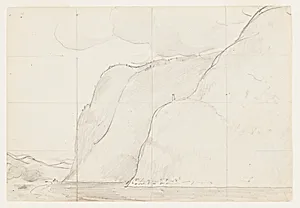
Study for "Cape Trinity, Saguenay River"
Medium
landscapes
Classification
landscapes
Department
Smithsonian Collection
Museum
Smithsonian American Art Museum
Credit
Gift of Charles Savage Homer, Jr.
Accession Number
1912-12-196
Rights
Public Domain
About this artwork
Research in Progress
Art Historical Context
Winslow Homer, one of foremost realist painters (1836–1910), created this *Study for "Cape Trinity,aguenay River"* 1904, late in his career when he increasingly sought inspiration in the untamed wilderness. After establishing his coastal studio in Prouts Neck, Maine Homer ventured to Canada's rugged Saguenay River region drawn to its dramatic cliffs and swirling waters. This preparatory work captures Cape Trinity's imposing majesty, reflecting his fascination with nature's raw power—a recurring theme in his oeuvre. As a study, it showcases Homer's masterful technique in rendering landscapes, likely through loose brushwork and keen observation of light and atmosphere. Renowned for transitioning from Civil War illustrations to luminous watercolors and oils, Homer here distilled complex scenery into essential forms, emphasizing texture and movement. His realistic style bridged Romanticism and modernism, influencing generations of American artists. Now in the Smithsonian American Art Museum as a gift from Homer's family, this piece offers a glimpse into the artist's process. It highlights his enduring legacy in celebrating the American (and North American) landscape, inviting visitors to ponder the sublime forces he so vividly evoked.