
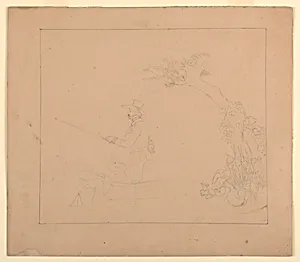
Study of a man
Medium
figures
Classification
figures
Department
Smithsonian Collection
Museum
Smithsonian American Art Museum
Credit
Gift of Mrs. Roger H. Plowden
Accession Number
1969-121-3
Rights
Public Domain
About this artwork
Research in Progress
Art Historical Context
William Stanley Haseltine, prominent American artist born in 1835, created *Study of a Man* around 1850, when he was just a teenager honing his skills. Best known for his luminous landscapes inspired by the Hudson River School and later European travels, Haseltine occasionally explored figure studies like this one, offering a rare glimpse into his early training. Produced in the medium of figures—likely a preparatory drawing or sketch—this work captures the artist's budding interest in human form amid the burgeoning American art scene of the mid-19th century. Dating to the eve of the Civil War, the piece reflects a time when young American artists like Haseltine were bridging classical European influences with emerging national identity, often studying anatomy and portraiture as foundational exercises. Though research on this specific study is ongoing at the Smithsonian American Art Museum, its classification as a figure study highlights its role in artistic practice: quick, observational sketches that built technical prowess for larger compositions. Today, generously gifted by Mrs. Roger H. Plowden to the Smithsonian Collection, *Study of a Man* invites visitors to ponder Haseltine's youthful promise. It reminds us how even masters began with humble studies, blending curiosity and discipline in the pursuit of capturing life's essence.