
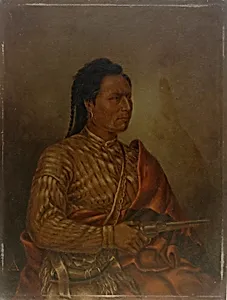
Ta-do-udo-sa (Prairie Chicken)
Medium
Painting
Classification
Painting
Department
Smithsonian Collection
Museum
Smithsonian American Art Museum
Credit
Smithsonian American Art Museum, Museum acquisition
Accession Number
1985.66.295,540
Rights
Public Domain
Tags
Art Historical Context
**Ta-do-udo-sa (Prairie Chicken)**, around 1887 by Antonio Zeno Shindler, the dignified portrait of a Pawnee. Born in Bulgaria in 1813 and settling in Washington, D.C where he died in 9, Shindler was skilled artist and photographer renowned for documenting Native American leaders and delegates visiting the nation's capital. This oil painting, now in the Smithsonian American Art Museum collection, exemplifies his precise, ethnographic style, blending European portrait traditions with respectful representation of Indigenous subjects. Created during a pivotal era of U.S. expansion and Native displacement, the artwork reflects the Smithsonian's early efforts to preserve visual records of tribal nations like the Pawnee, who inhabited the Great Plains and were known for their skilled horsemanship and earth lodge villages. Ta-do-udo-sa, whose name evokes the resilient prairie chicken—a bird symbolizing vigilance in Plains cultures—likely sat for Shindler during an official visit, highlighting the complex interactions between Native peoples and federal institutions. As a museum acquisition, this portrait offers visitors a window into 19th-century anthropology and artistry, underscoring the Pawnee's enduring cultural legacy amid rapid change. Shindler's work remains significant for its historical accuracy and sensitivity, inviting reflection on identity and representation. (198 words)