
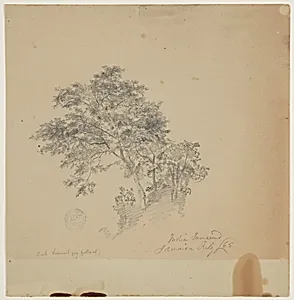
Tamarind Tree, Jamaica
Medium
nature studies
Classification
nature studies
Department
Smithsonian Collection
Museum
Smithsonian American Art Museum
Credit
Gift of Louis P. Church
Accession Number
1917-4-11-c
Rights
Public Domain
About this artwork
Research in Progress
Art Historical Context
Frederic Edwin Church, master of the Hudson River School known for his luminous, detailed landscapes evoking the sublime power of nature, created *Tamarind Tree,* in July 1865. This nature study captures the exotic allure of a tropical tamarind tree during's travels to the Caribbean island, a journey he undertook amid personal tragedy—the recent loss of his young son—and the shadow of the just-ended American Civil War. Church's expeditions often blended artistic pursuit with exploration, bringing the vibrancy of distant locales into American art. As a nature study, likely rendered in oil sketch on paperboard, the work exemplifies Church's meticulous technique: precise observation of light filtering through leaves, rich textures, and atmospheric effects. These on-site studies served as vital references for his grand studio paintings, like *Niagara* or *Heart of the Andes*, translating raw nature into epic visions that inspired awe in 19th-century viewers. Housed in the Smithsonian American Art Museum through a gift from Church's son Louis P. Church, this piece highlights the artist's global curiosity and enduring legacy in celebrating nature's diversity. It invites us to ponder how a single tree could symbolize resilience and renewal in turbulent times.