
Tape Measure Case
Classification
metalwork
Department
Smithsonian Collection
Museum
Smithsonian American Art Museum
Credit
Gift of Alice Stern
Accession Number
1994-105-4
Rights
Public Domain
About this artwork
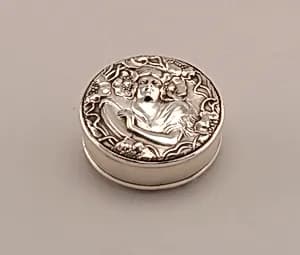
Cylindrical form, the narrow central band with slot for measuring tape; one circular side with woman holding tambourine within a circular floral border, the other side showing flowers (poppies?) with long, sinuous curling stems radiating out from central knop.
Art Historical Context
**Tape Measure Case, ca. 1900** Crafted by the Unger Brothers, a prominent metalworking firm in Newark, New Jersey (active 1872–9), this charming cylindrical tape measure case exemplifies the artistry of American metalwork at the turn of the 20th century. Now part of the Smithsonian American Art's collection through the gift of Alice Stern, the transforms a humble utilitarian object—a tailor's or seamstress's tool—into a decorative gem. Its narrow central band features a practical slot for dispensing the measuring tape, blending functionality with elegance. One side showcases a graceful woman holding a tambourine, framed by a lush circular floral border, evoking the exoticism and vitality of the era's decorative arts. The reverse blooms with flowers—possibly poppies—their long, sinuous curling stems radiating from a central knop in a dynamic, organic pattern. These motifs reflect Art Nouveau influences, popular around 1900, where natural forms twisted into rhythmic, flowing designs to celebrate beauty in everyday life. Newark's thriving metal industry produced such finely wrought objects for middle-class homes, highlighting how the Aesthetic Movement elevated crafts to fine art. Imagine a Victorian seamstress pulling tape from this jewel-like case— a delightful fusion of practicality and whimsy that captures America's Gilded Age creativity. (198 words)