
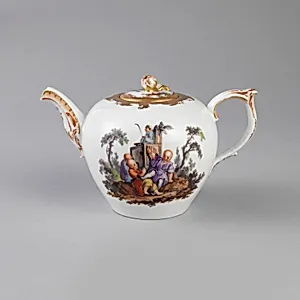
Teapot with Chinoiserie Vignettes
Medium
ceramics
Classification
ceramics
Department
Smithsonian Collection
Museum
Smithsonian American Art Museum
Credit
Bequest of Erskine Hewitt
Accession Number
1938-57-651-a,b
Rights
Public Domain
About this artwork
Research in Progress
Art Historical Context
Step into the refined world of 18th European porcelain with this exquisite *Teapot with Chinoiserie Vign*, crafted around 1770 by the Royalcelain Manufactory in, established in 1763. under royal patronage, the manufactory—known today as KPM—quickly rose to prominence for its technical mastery in hard-paste porcelain, rivaling finest Chinese imports. This teapot exemplifies luxury goods that graced aristocratic tea tables, blending functionality with opulent decoration. The surface features delicate *Chinoiserie* vignettes—whimsical scenes inspired by Chinese art, a craze sweeping Europe in the Rococo era. European artists reimagined exotic motifs like pagodas, figures in flowing robes, and lush landscapes, often with a playful, fantastical twist. Painted in vibrant enamels and fired with precision, these vignettes highlight the manufactory's innovative glazing techniques, which ensured lasting color and sheen. Housed in the Smithsonian American Art Museum through the bequest of collector Erskine Hewitt, this piece reflects the cultural exchange between East and West, symbolizing Enlightenment-era curiosity and the rise of porcelain as a canvas for fantasy. Though research continues, it invites us to savor the artistry of an age when a simple teapot embodied global sophistication.