
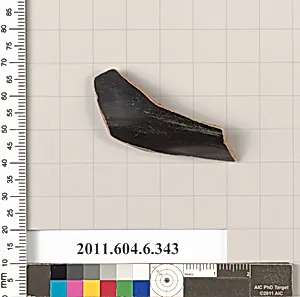
Terracotta fragment of a closed shape
Unknown Artist
6th/5th centuries BCE
Medium
Terracotta
Classification
Vases
Culture & Period
Greek, Attic · Archaic/Classical
Department
Greek and Roman Art
Museum
Metropolitan Museum of Art, New York, NY
Credit
Gift of Dietrich von Bothmer, Distinguished Research Curator, Greek and Roman Art, 2011
Accession Number
2011.604.6.343
Rights
Public Domain
Art Historical Context
This delicate terracotta fragment from a closed-shape vase hails from Attic Greece during the Archaic/Classical transition (6th/5th BCE), a golden age of pottery production in ancient Athens. Closed shapes, such as lekythoi or aryballoi, were practical vessels for storing oils, perfumes, orents, often used in rituals, burials, or as grave offerings. As a survivor from this era, it offers a glimpse into the everyday artistry of Attic workshops, where potters and painters crafted wares for both local use and export across the Mediterranean. Terracotta, fired clay valued for its durability and versatility, was the medium of choice for these vases, frequently decorated with black-figure or emerging red-figure techniques that showcased mythological scenes, daily life, or abstract patterns. Though incomplete, such fragments are treasures for scholars, revealing firing methods, wheel-thrown forms, and the precision of ancient hands. This piece exemplifies the Attic mastery that influenced Greek art worldwide, blending utility with subtle aesthetic appeal. Generously donated to the Metropolitan Museum of Art in 2011 by Dietrich von Bothmer, a legendary curator of Greek and Roman Art, it enriches our understanding of Archaic innovation bridging to Classical perfection. Stand close and imagine it whole, whispering stories from antiquity.