
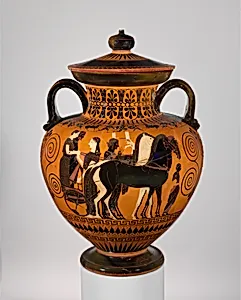
Terracotta neck-amphora (jar) with lid and knob (27.16)
ca. 540 BCE
Medium
Terracotta
Dimensions
H. 18 1/2 in. (47 cm) diameter 9 3/4 in. (24.8 cm)
Classification
Vases
Culture & Period
Greek, Attic · Archaic
Department
Greek and Roman Art
Museum
Metropolitan Museum of Art, New York, NY
Credit
Rogers Fund, 1917
Accession Number
17.230.14a, b
Rights
Public Domain
Tags
About this artwork
"Terracotta neck-amphora (jar) with lid and knob (27.16)" by Exekias, created in ca. 540 BCE, is executed in terracotta. This vases belongs to the Metropolitan Museum's Greek and Roman Art collection. The work measures h. 18 1/2 in. (47 cm) diameter 9 3/4 in. (24.8 cm). It originates from Greek, Attic, Archaic. The artwork entered the museum's collection through rogers fund, 1917.
Art Historical Context
This elegant terracotta neck-amphora, crafted by the renowned Athenian potter and painter Exek around 540 BCE, the pinnacle of Archaic Greek black-figure pottery. Standing 18½ inches tall with a 9¾-inch diameter, this jar—complete with its fitted lid and knob—was designed for storing precious oils or wine, a staple in ancient Greek households and symposia. Exekias, one of the greatest masters of the black-figure technique, signed many of his works, underscoring his pride in their quality. The vase's decorations, featuring men, women, horses, and chariots, likely depict dynamic mythological or heroic scenes, a hallmark of Attic vase-painting. In black-figure style, figures were incised through a glossy black slip to reveal the red clay beneath, with added details in white and purple for vibrancy. Exekias' precise incisions and balanced compositions brought life to these narratives, influencing generations of potters. Acquired by the Metropolitan Museum of Art through the Rogers Fund in 1917, this amphora offers a window into Archaic Greece's cultural reverence for heroism, athletics, and the divine. Its survival highlights the durability of terracotta and the enduring artistry of Athens' workshops.