
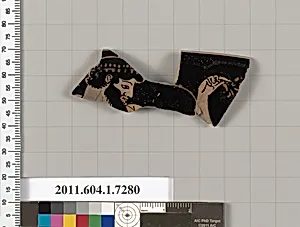
Terracotta rim fragment of a kylix (drinking cup)
Unknown Artist
500–480 BCE
Medium
Terracotta
Classification
Vases
Culture & Period
Greek, Attic · Archaic
Department
Greek and Roman Art
Museum
Metropolitan Museum of Art, New York, NY
Credit
Gift of Dietrich von Bothmer, Distinguished Research Curator, Greek and Roman Art, 2011
Accession Number
2011.604.1.7280
Rights
Public Domain
Art Historical Context
This delicate terracotta rim fragment from kylix, or shallow drinking cup, offers a glimpse into the refined world of Archaic Greek symposia around 500–480 BCE. Crafted in Attic Greece—the heartland of classical pottery production—this piece hails from the late Archaic period, just before the full bloom of the Classical era.ylikes like this were essential for communal drinking parties, where elites reclined on couches, sharing wine diluted with water as a social and philosophical ritual. Though only a fragment survives, its terracotta medium exemplifies the masterful techniques of Attic vase-makers. Fired in kilns to a warm reddish hue, these vessels were often decorated in the emerging red-figure style, where figures were outlined in black slip and details incised or painted, leaving the clay's natural color to shine through. This innovation allowed for greater anatomical precision and narrative complexity compared to earlier black-figure pottery. Donated to the Metropolitan Museum of Art in 2011 by the esteemed Dietrich von Bothmer, the fragment underscores the enduring allure of Greek ceramics, which exported culture across the Mediterranean. Even in its incomplete state, this artifact speaks volumes about daily life, artistry, and cultural exchange in ancient Athens—reminding us how everyday objects carried profound aesthetic and social weight.