
Textile Fragment
Unknown Artist
4th–5th century
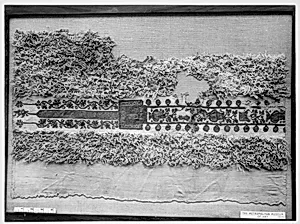
Medium
Wool, linen; plain weave, tapestry weave, weft loop weave
Dimensions
H. 26 7/16 in. (67.2 cm) W. 16 1/8 in. (41 cm)
Classification
Textiles
Department
Islamic Art
Museum
Metropolitan Museum of Art, New York, NY
Credit
Purchase by subscription, 1889
Accession Number
89.18.34
Rights
Public Domain
Art Historical Context
This exquisite Textile Fragment, dating to the 4th–5th century, offers a rare glimpse into the sophisticated textile arts of Late Antiquity. Housed in the Metropolitan Museum of Art's Department of Islamic Art, this wool and linen piece measures an impressive 26 716 by 16 1/8 inches (67.2 × 41 cm). Acquired a subscription purchase in 1889 it survives as a testament to the's masterful craftsmanship, likely originating from regions like Egypt or the Near East where such techniques flourished. The fragment showcases a masterful blend of weaving methods: plain weave for a sturdy foundation, tapestry weave for vibrant, discontinuous patterns, and innovative weft loop weave that creates a textured, pile-like surface akin to early velvet. These techniques highlight the technical prowess of ancient weavers, who manipulated fibers to produce durable yet decorative fabrics for garments, hangings, or ecclesiastical use. In the broader context of Islamic Art collections, this fragment bridges pre-Islamic Late Antique traditions with later developments, underscoring the enduring cultural importance of textiles in the Islamic world. Its survival speaks to the fragility and value of these artifacts, inviting us to imagine the vibrant markets and skilled artisans of over 1,500 years ago.